Hotjar vs Brainsight: Predictive AI Heatmaps vs Behavioral Tracking

Introduction
Most teams use tools like Hotjar to understand what users do: where they click, how far they scroll, and where they drop off. But there’s a fundamental blind spot.
Users can only interact with what they actually see.
Behavioral tools don’t show what was never seen in the first place. They measure the result, not the cause. This is where predictive eye-tracking platforms like Brainsight come in. Instead of measuring behavior after the fact, they predict what users are likely to notice in the first few seconds, before any click or scroll happens.
In this comparison, we break down the difference between behavioral tracking and predictive attention, and when to use each. Because in practice, tools like Hotjar and Brainsight work best together.
Mouse vs. eye
We often get the question what the difference is between Brainsight and Hotjar heatmaps. The key difference is simple: Hotjar heatmaps are based on mouse tracking, while Brainsight heatmaps are based on predictive eye-tracking.
Hotjar measures user behavior, including clicks, cursor movement, and scroll depth. These behavioral heatmaps provide valuable insights into how users interact with a page, such as:
▸ Where users click the most
▸ Rage clicks on non-clickable elements
▸ How users navigate through a page
▸ How far they scroll
This makes Hotjar a strong tool for understanding what users do after they land on a page.
Mouse tracking shows interaction. Eye-tracking predicts attention.
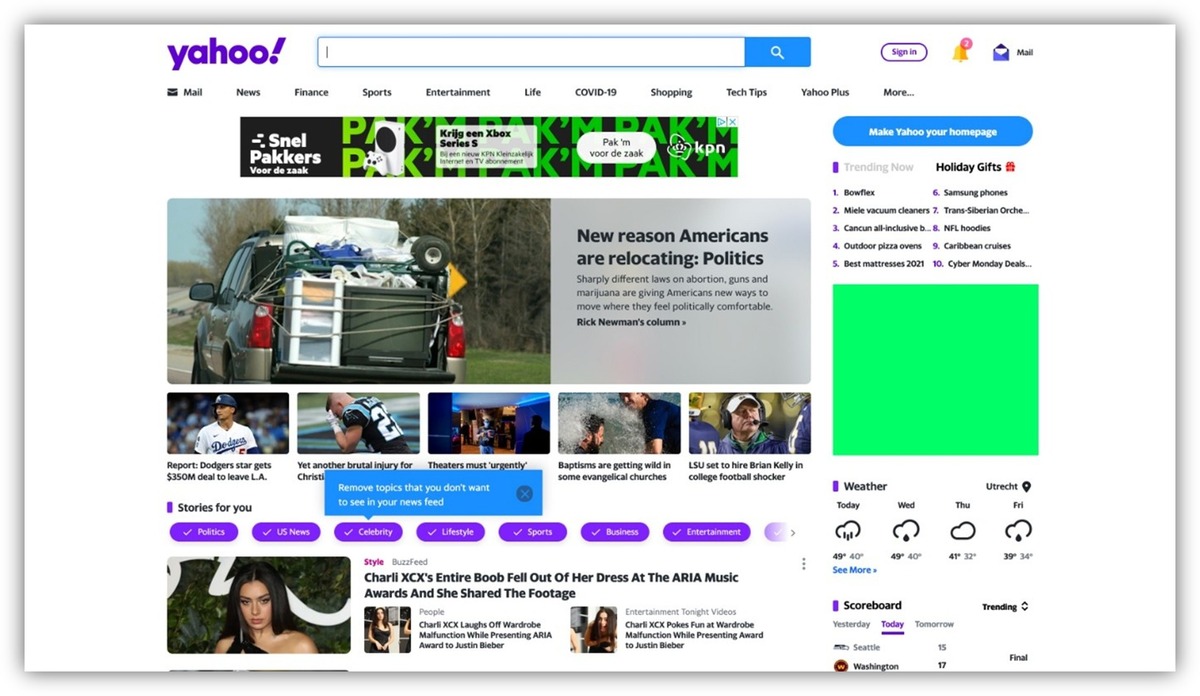
Example of a Hotjar click heatmap below:

Predictive Eye-Tracking Heatmaps
Brainsight (AI) heatmaps are based on predictive eye-tracking. Instead of measuring behavior, they predict where users are likely to look when they first see a page, ad, or design.
This reveals:
▸ What elements attract immediate attention
▸ What gets ignored
▸ Whether key elements (like your CTA) are actually seen
▸ Which elements distract from your main message or flow
In other words, predictive attention heatmaps help you understand what stands out (and what doesn’t), guiding your visual hierarchy and design decisions.
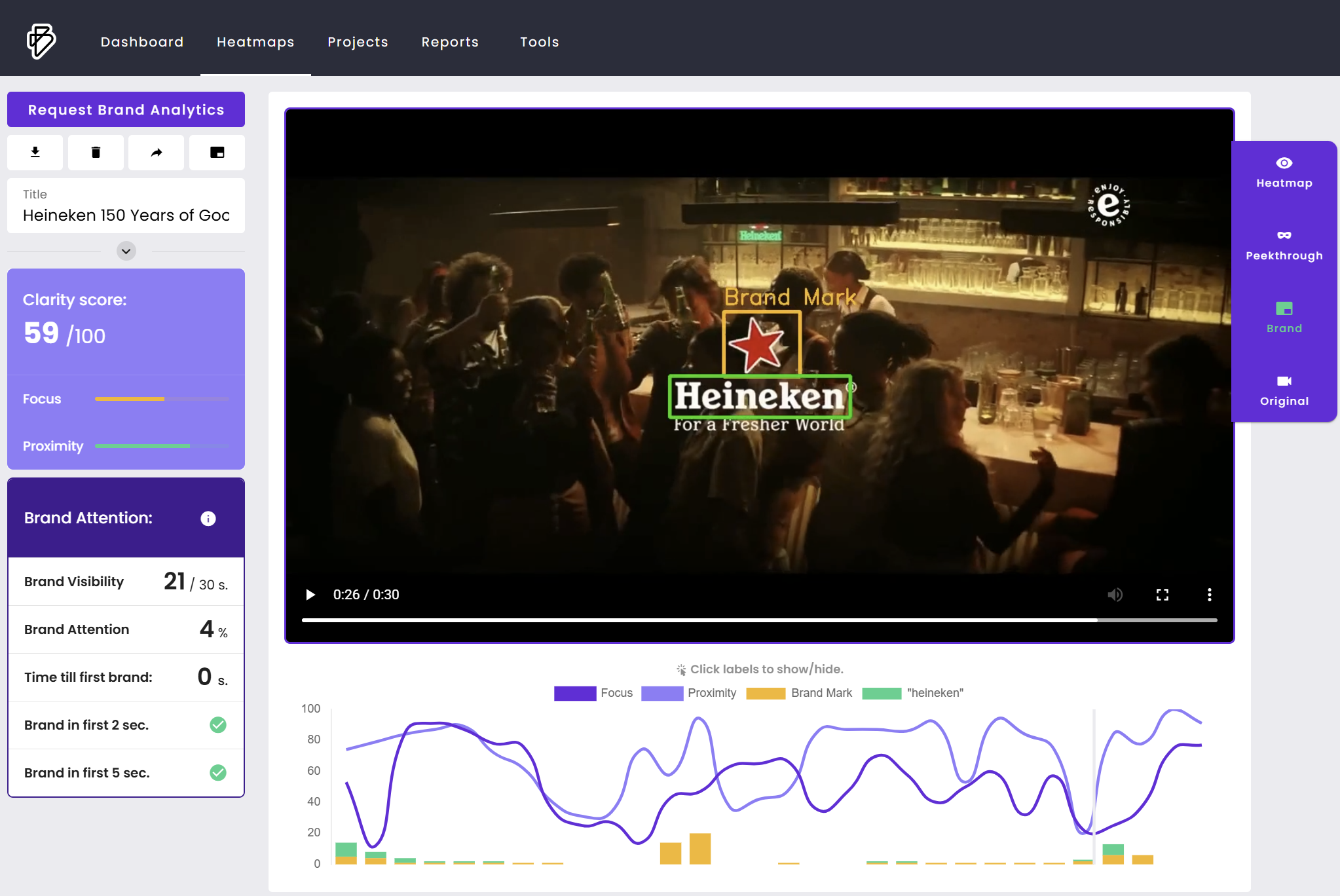
Example of a Brainsight predictive heatmap below:

Why click data can be misleading
Click data is often used to judge performance, but it can also be misleading.
If a CTA gets few clicks, the assumption is usually that users aren’t interested. In reality, the problem could also be related to visibility. Was the CTA overlooked? Was it outside a natural scan path, or in a dead zone? Users can’t click what they don’t see.
Predictive attention analysis helps identify whether key elements are actually noticed, before drawing conclusions based on behavior.
Is Brainsight a Hotjar alternative?
Tools like Hotjar are widely used for behavioral tracking, but they don’t provide insight into what users actually see. This is where Brainsight comes in as an AI heatmap alternative.
Instead of measuring clicks and scroll behavior, Brainsight predicts visual attention — making it a strong Hotjar alternative for pre-testing and design validation. In practice, many teams use both: Brainsight to optimize visibility before launch, and Hotjar to measure behavior after.
How They Work Together
Because Brainsight and Hotjar are based on different types of data, they are not competing tools; they are complementary.
For example:
▸ Assess or explain Hotjar events, i.e. if your CTA gets few clicks (Hotjar), check whether it actually receives attention (Brainsight)
▸ Complement Hotjar data with Brainsight insights for optimization and A/B testing hypotheses (see below).
In many cases, low interaction is not caused by lack of interest — but by lack of visibility.
You can then create and test multiple design variants, use predictive heatmaps to validate which version attracts more attention, and finally use Hotjar again to measure the behavioral impact after launch.
A CRO Powerhouse: Better A/B Testing Starts with Better Hypotheses
Tools like Hotjar, Contentsquare and VWO are essential for running experiments and measuring performance. They help you understand what users do — and which variant performs better.
But strong A/B testing doesn’t start with testing. It starts with better hypotheses. That’s where predictive attention tools like Brainsight come in.
By analyzing what users are likely to see before launching a test, you can:
▸ Validate whether key elements are visible
▸ Identify distractions in the visual hierarchy
▸ Prioritize the right design changes to test
Instead of testing based on assumptions, you test based on predicted attention.
The result:
▸ Stronger data-driven A/B testing hypotheses
▸ Fewer test iterations
▸ Faster learning cycles
In practice, this combination turns behavioral data and predictive attention into a true CRO powerhouse — optimizing not just what users do, but what they see before they act.
---------------------------------------------
Frequently Asked Questions
Is Brainsight a Hotjar alternative?
Yes, but it solves a different problem. Tools like Hotjar measure user behavior (clicks, scrolls), while Brainsight predicts visual attention. Many teams use both together for a complete view.
What is the difference between predictive heatmaps and Hotjar heatmaps?
Hotjar heatmaps are based on mouse tracking and show interaction data. Predictive heatmaps are based on AI models that simulate where users are likely to look, before any interaction happens.
Do heatmaps show where users look?
Not always. Most traditional heatmaps (like click maps) show behavior, not actual visual attention. Predictive eye-tracking models estimate what users are likely to see.
Is predictive eye-tracking better than Hotjar?
It’s not a replacement, it’s complementary. Predictive eye-tracking helps you understand visibility before users interact, while Hotjar helps you analyze behavior after interaction.
Why are users not clicking my CTA?
Low clicks don’t always mean low interest. In many cases, the CTA is simply not seen. Predictive attention analysis can help determine whether visibility is the issue.
What is AI pre-testing software?
AI pre-testing software, like Brainsight, allows you to evaluate designs, ads, or pages before launching them. It predicts attention and visual impact without needing real user data.