Will AI Replace Human Creativity in 2026? A Review of Predictive Tech and the Future of Advertising
.mp4%20-%20Heatmap.jpg)
The Future of Advertising: Humanizing Creatives, AI Stacking, and the Death of the Hourly Model
A version of our article was featured on MediaPost, the leading global platform for advertising professionals, as part of their year in review expert articles
2025: The Year AI Dominance Became Inevitable
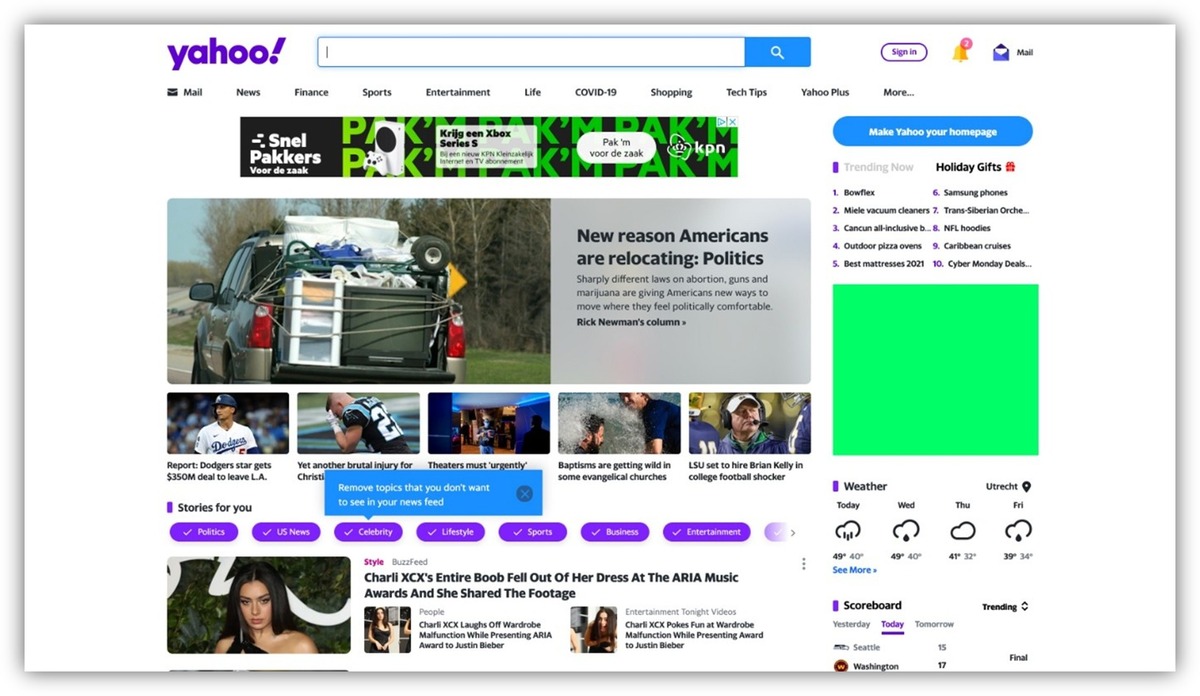
The year 2025 ended with a fierce debate: could AI ever replicate the emotional resonance of a human copywriter? While the 2025 Super Bowl ads featured human-centric storytelling that topped the charts, the industrial shift was already irreversible. The reality of 2026 is that while AI may not "feel" human emotion, it can now precisely design for it. Through Predictive Eye-tracking, AI doesn't guess where attention goes; it dictates the visual hierarchy required to trigger specific emotional responses.
The learning curve was best exemplified by Coca-Cola. Despite early criticism of AI-generated inconsistencies in their festive campaigns, the message from global giants was clear: AI is learning every day, and the resulting 30% to 50% production savings are too significant for the market to ignore.
The 2026 Conundrum: AI stacking and the age of agents
We have entered the era of AI Stacking: a workflow where specialized AI models manage and optimize one another. This is the core vision behind Brainsight. Through our API integrations, we have moved beyond simple tools into a neuro-architectural ecosystem where AI-agents act as both art directors and media planners6.
Imagine a standard 2026 workflow:
- An Audience-Agent analyzes the psychographic data of Gen-Z.
- It communicates with the Brainsight Predictive Eye-tracking API to determine the optimal cognitive load and gaze sequence—which, for a Gen-Z consumer, differs fundamentally from a Boomer.
- This data is fed into an AdGen platform to generate thousands of scientifically validated creative variations in seconds.
The 80/20 Rule: the "McKinsey Model" of advertising
The industry seems to be bifurcating into a new structure:
- 80% of digital marketing assets are generated, tested, and deployed entirely by AI for maximum scale and efficiency.
- The top 20% remains the sanctuary of human brilliance—high-level conceptual strategy, world-building, and disruptive emotional narratives.
This mirrors the elite consulting world (the McKinsey model), also following the hourly billing earnings model and currently struggling with GenAI. Brands hire the Big Five (Omnicom, WPP, Publicis, Dentsu, Havas) for the expensive 20%, the "Big Idea." However, the 80% execution layer that follows is where agencies traditionally made their margins through billable hours. This process is now subject to automation. Following the Omnicom-IPG merger, the pressure to pivot from "time-spent" to "AI-delivered" has never been higher. As also further explored in our recent MediaPost editorial, buying market-share and a shift from billable hours to AI-tech is accelerating.
David vs. Goliath: The battle for the execution layer
The Big Five are currently in a race against AdGen SaaS scale-ups. While the giants have the data, these "Davids" have the agility. Also, with SaaS as their key business model, investors are keen to pour money into them, given their much higher multipliers in value compared to human-driven organizations. Without the drag of massive payrolls and office rents, small digital-native firms are using AI to take on huge holding groups effectively.
A nice analogy to the current industry changes is that of the early days of the e-commerce era:
Large agencies find themselves where traditional retailers were during the rise of e-commerce. Retailers initially lagged behind digital natives but caught up by leveraging their superior supply chain management (SCM), like distribution, networks and buying power. Agencies with the best "Creative SCM" (in this case: decades of expertise and data on human emotion and creativity), can win if they digitize that expertise.
Consolidation & the AI-agent era
We are witnessing a massive wave of (upcoming) consolidation. The Big Five are racing to integrate "AI Operating Systems", like WPP Open or Publicis’ Epsilon-driven AI, to maintain their grip on the execution layer. Simultaneously, AdGen SaaS platforms are merging to build full-stack solutions.
In this landscape, AI Stacking is becoming the new standard. It is no longer about single tools, but about specialized AI disciplines collaborating in integrated platforms. For example, a Target Audience specialized Agent will "talk" to a neuromarketing API, like Brainsight, to determine the ideal visual Clarity and acceptable cognitive load threshold for a specific demographic. Other (neuromarketing) or Attention-AI data is gathered in a similar way, and eventually by a Creative Director Agent whom instructs the AdGen-design agent to (re)render the creative. It's sounds futuristic, but it is already happening (as we know from practice). In this ecosystem, neuro-AI is a vital puzzle piece that ensures the automated output remains human-centric. So yes, AI is humanizing creatives. Failing often, learning fast.
The human - AI synergy
The 2025 "Sydney Sweeney" campaign for American Eagle proved that human intuition regarding controversy still drives massive sales and remains a vital lesson in synergy. While predictive attention analysis showed that the branding was technically overshadowed by the celebrity's presence (to put it mildly), human intuition knew the resulting cultural conversation would drive sales, despite poor attention drivers; a 100% human strategy.
This proves that neuromarketing AI is not a replacement for the creative "soul," but a functional component of the stack. Whether through direct collaboration, API-plugs, or as an acquisition target for larger platforms, tools that "humanize" AI-content by providing neurological feedback are becoming the silent partners in every successful 2026 campaign, helping the AI focus on human angles.
Conclusion: the only winner of 2026
Who wins the race? The entity that successfully pairs the speed of AI-agents with the deep human nuance of the agency world? It will not be about volume and speed only. In 2026, you don't win by just creating more; you win by validating faster. In the AI-stack of tomorrow, if your creative isn't scientifically optimized for attention and cognitive load, it will be filtered out by the very algorithms you’re trying to reach.
Q&A Section: Questions about Predictive Attention, Creative AI, and Brainsight's Role in Generative AI Advertising:
What is predictive eye-tracking, and how is it used in advertising?
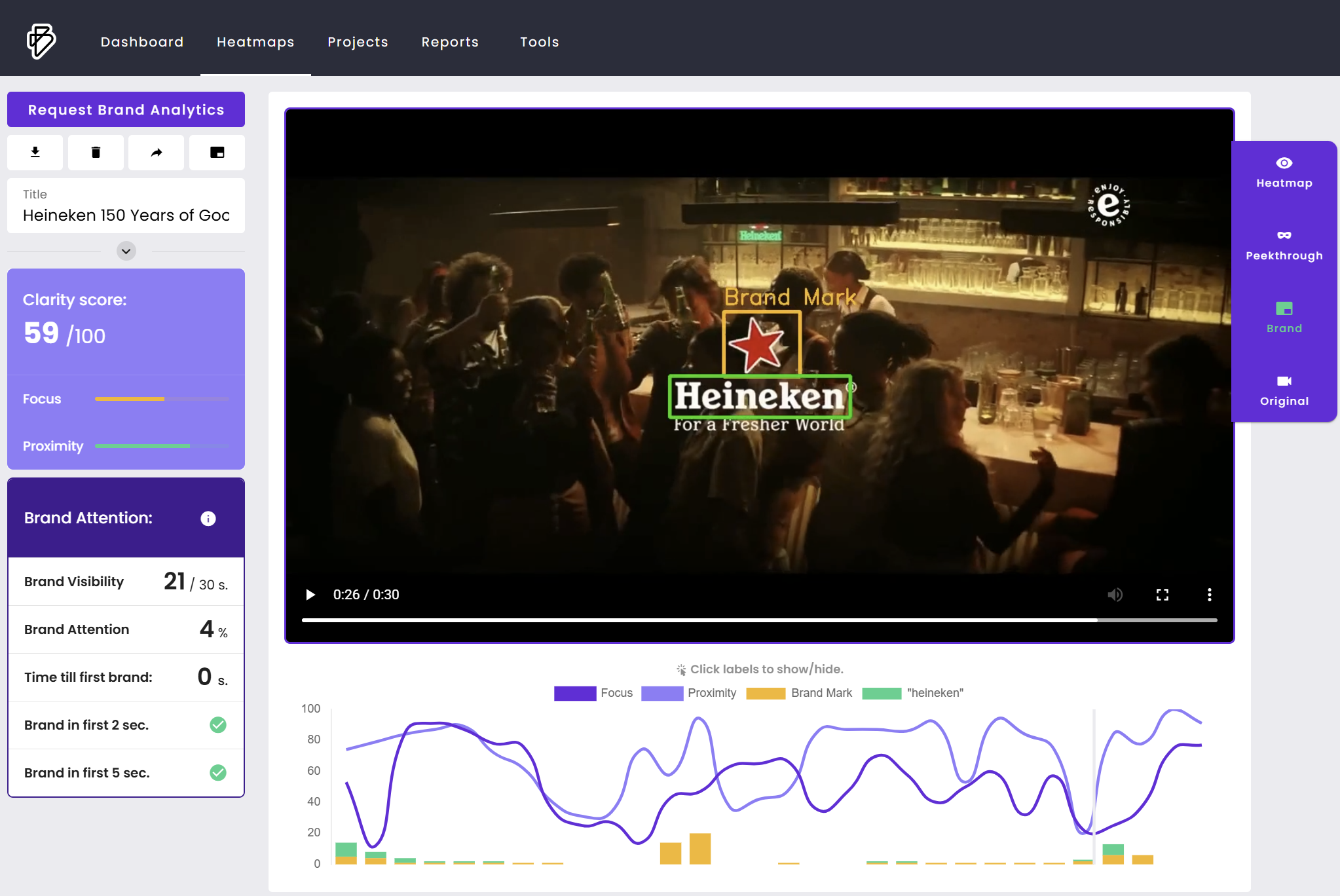
A: Predictive eye-tracking uses AI models trained on neuroscience and visual attention data to simulate where people are likely to look within the first few seconds of viewing an image or video. In advertising, it helps brands and creative teams optimize layouts, visuals, and branding for maximum attention impact—before spending on media. Platforms like Brainsight use predictive eye-tracking to generate heatmaps and gazeplots that simulate human visual behavior across demographics.
Why is predictive attention important for GenAI content?
A: GenAI tools can generate thousands of creative variations—but without validation, most won’t perform. Predictive attention tools like Brainsight assess how real people would visually engage with content, identifying what grabs attention or gets ignored. This allows GenAI platforms to filter out ineffective variants early and focus on creative that’s scientifically optimized for visibility and impact.
Why does human intuition still matter alongside Neuroscience AI?
A: While Neuroscience AI and consumer psychology models are increasing and improving, some, like predictive eye-tracking can already accurately forecast human viewing behaviour, like visual saliency, attention and cognitive processing. Using tools like Brainsight’s predictive eye-tracking as a prime example, human intuition remains essential for cultural context and disruptive storytelling. A human choice to embrace controversy or subtle humor can drive massive sales even when AI models suggest the branding is "technically" overshadowed. The true power of 2026 marketing lies in the synergy between the creative soul and neurological validation.
How does Brainsight’s specifically enhance AdGen SaaS platforms?
A: Brainsight acts as a specialized data-layer within the AI stack. By plugging the Brainsight API into AdGen platforms, it provides real-time feedback on attention, cognitive load and gaze sequences. This ensures that the thousands of assets generated by AI aren't just numerous, but are neurologically optimized to be processed by the human brain.
How does Brainsight integrate with GenAI creative platforms?
A: Brainsight offers an API that plugs directly into generative AI workflows, allowing platforms to validate or optimize their creative output using neuroscience-based attention data. It acts as a neuromarketing intelligence layer, helping GenAI systems create content that captures instant attention and avoids cognitive overload. This ensures AI-generated ads remain human-centric and high-performing.
How does Brainsight differ from traditional eye-tracking tools?
A: Traditional eye-tracking requires hardware and human participants. Brainsight uses AI trained on massive datasets to predict attention instantly—at scale, without live testing. This makes it ideal for GenAI platforms, A/B testing, UX design, and rapid creative iteration. It's cost-effective, fast, and grounded in validated neuromarketing science.