The Scaling Tax & Operational Density: how to scale output without headcount bloat

There is a quiet, tough phase in every successful venture where growth stops feeling like an achievement and starts feeling like a burden. You’ve moved past the "kitchen table" stage; your revenue is becoming meaningful, and the stakes are higher than ever. But the very thing you worked for, growth, begins to fight you.
Investors start asking for documented processes. Corporate clients demand security compliance. Your once-agile team is suddenly lost in a maze of middle-management syncs and "alignment meetings." This is the Scaling Tax: the invisible drag of bureaucracy and overhead that creeps in with every new hire.
The Elephant in the Room: Won't AI Agents Fix This?
The "Agentic Era" promises a digital army that handles your marketing, sales, and ops by next Tuesday. But we are currently in the "Trough of Disillusionment" on this hype cycle for a reason.
Yes, AI Agents are the future (and present, for some) but they are a multiplier, not a foundation. If your engine block is cracked and your data is messy, an Agent only accelerates the chaos. The hard truth is that most startups and scale-ups are too unstructured to be 'agent-ready'. Agents require strong guardrails and mature systems to function without "hallucinating" your company into a PR nightmare. They are the turbocharger; you first need a high-performance engine. And let’s not forget that you also want to be in direct contact with your customers as much as you can, to understand their needs and know where to develop your product or service.
.webp)
In 2026, the true status symbol isn't a massive headcount or a fleet of bots. It’s Operational Density. It’s the art of scaling your output while keeping your core team lean, structured, and, above all, investable. Here is how you build your "Ghost Stack."
1. The Digital Foundation: your 24/7 autonomous storefront
Before you hire your first marketing lead, your website is already your most scalable employee. However, many companies hit a wall here early on: Frictional Debt. This happens when every minor copy change or landing page iteration requires a developer or an outside agency, killing your speed (and budget).
To maintain momentum, you must own your infrastructure and need it to be scalable without hassles later down the road. Framer has become the 2026 favorite for agile teams because it allows designers to publish directly, bypassing the dev bottleneck.
For those building complex SaaS products that require deep CMS power, Webflow remains the gold standard. By using Webflow alongside an AI collaborator like Google Gemini, non-technical founders can manage technical SEO and complex structures without expanding their web team prematurely.
Once the infrastructure is set, remove Conversion Friction. Trust is built on professionalism. While TidyCal is a brilliant, lean choice for founder-led businesses, scaling teams eventually gravitate toward Calendly for its round-robin routing and deep ecosystem integrations. This ensures that a prospect can book a demo or meeting in three clicks instead of emailing back and forth.
You may want to consider (GenAI) chatbots, like Dante AI, but think about direct customer contact and control to make a judgement on that.
2. Finance & Trust: building the investable core
As revenue grows, the "back office" often becomes the largest structural cost driver. You start drowning in purchase (and hopefully sales-) invoices and bank reconciliation. Investors and corporate procurement departments don't care about your "startup energy"; they want to see Institutional Memory and clean books.

Instead of setting up or expanding a finance department, you want systems that treat finance like an automated stream. Tools like Pennylane (or Xero for a larger international reach) are credible options to automate your finance and tax activities with minimal human effort. They use AI for automatic bookings and matching, prepare your tax filings, and provide reports that make you "Due Diligence Ready" at a moment’s notice. With professional sales invoices it also builds reputation for your brand when invoicing clients (instead of the pdf’ed Excel sheets that most start with).
When you add team members, payroll becomes a compliance nightmare. PaystubHero is a lean solution, allowing you to generate professional payroll documentation quickly.
For legal peace of mind, Dropbox Sign ensures all contracts and NDAs are professionally signed and stored, creating the paper trail that future acquirers will demand. They also chase for unsigned documents, saving lots of time. The great thing about this is that you’ll start with a free plan.
3. Sales & Marketing Intelligence: the science of attention
Scaling sales and marketing isn't about hiring five SDRs (Sales Development Representative); it's about equipping your best people with tools to not only fight competitors, but also the global decline in human attention.
A structured CRM like Attio or Pipedrive is essential. The real magic happens when you connect your website directly to your sales intelligence. By using Leadfeeder to identify which companies are visiting your site and plugging that data into your CRM, you create an automated lead-gen loop.
For content, GenAI / LLM tools multiply your output by drafting blogs and ad variants in seconds. When paired with Stix, which structures and automates your content distribution, so that you maintain a consistent presence (simply build a backlog of posts and the tool takes over to post it on your behalf, including recycling variants).
In the meantime you want to pre-test and analyze your website and advertising:
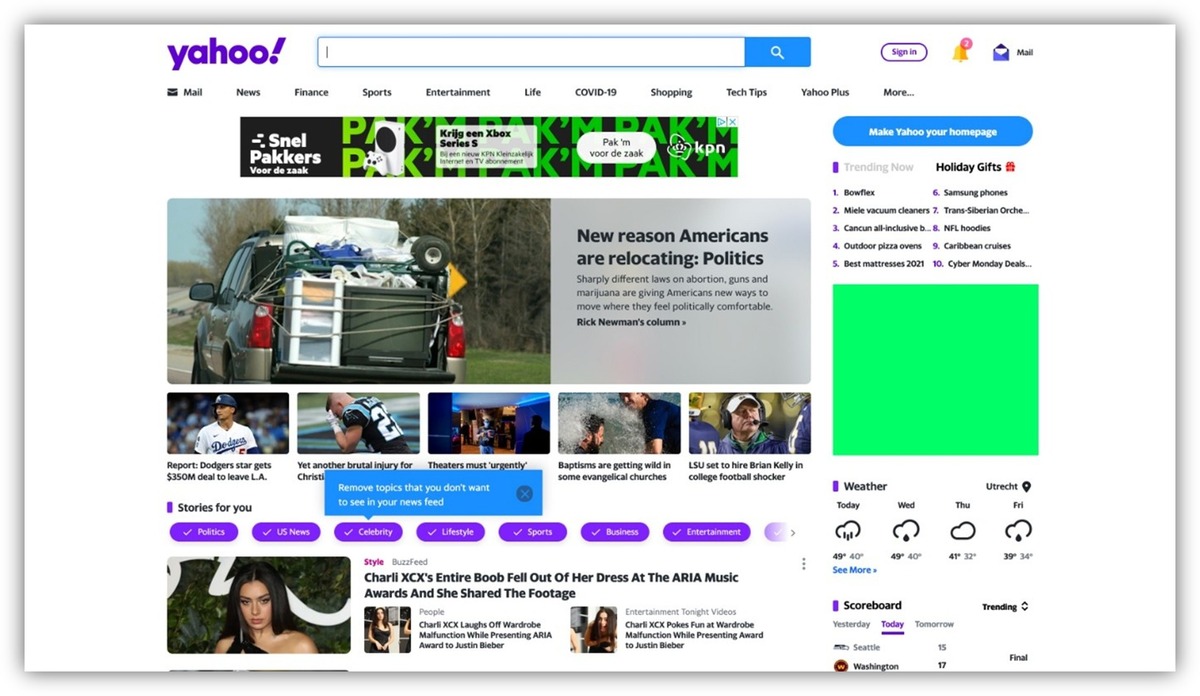
- Behavior Analysis: Use Microsoft Clarity to analyze what users actually did on your website, i.e. where they clicked and where they bounced. This domain used to be dominated by Hotjar, but Microsoft’s (free) tool is a great alternative.
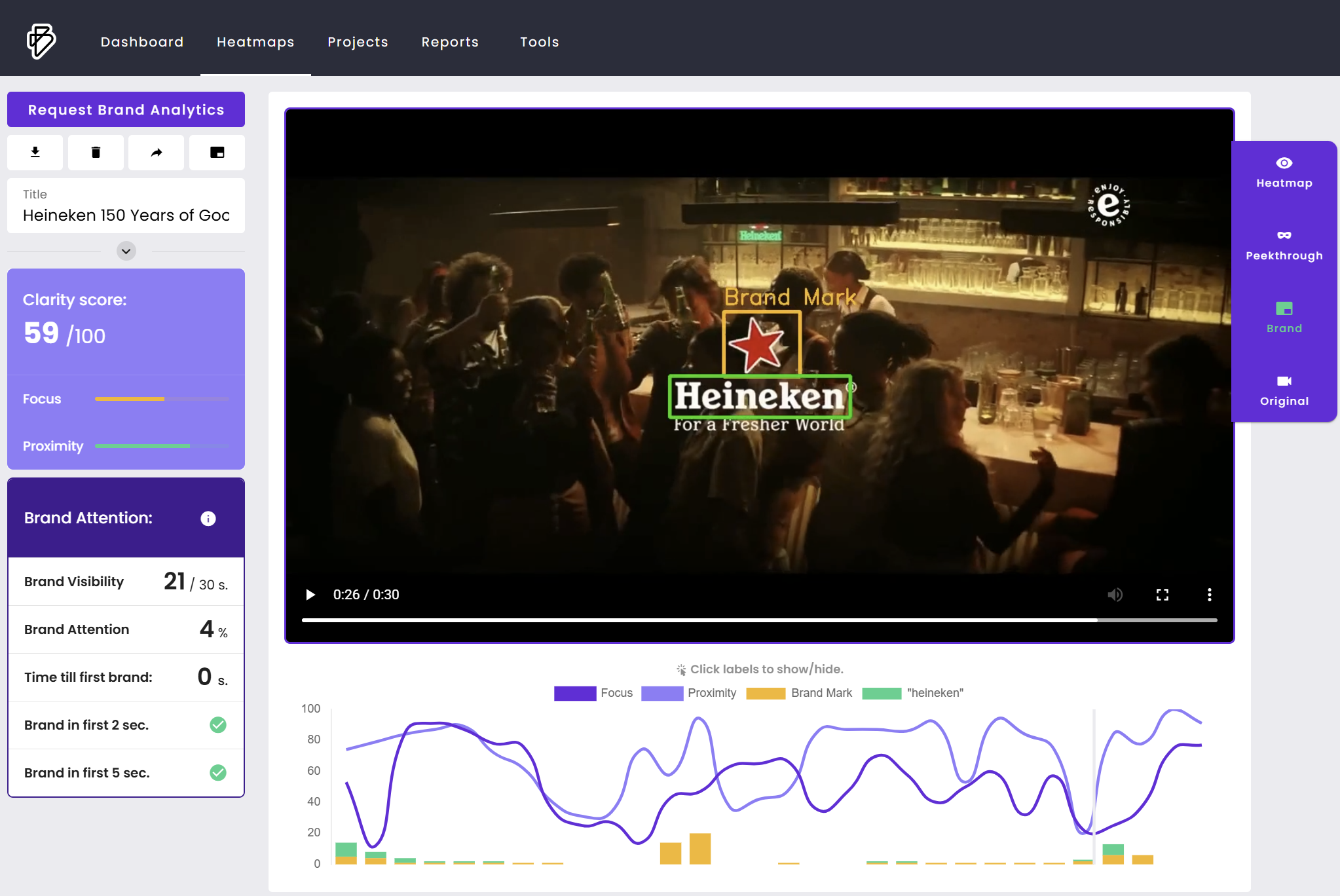
- Attention Prediction: Use Brainsight to predict how users view your web pages when they land on it. In the critical first 2-3 seconds you’ll have a full analysis of your Visual Hierarchy, CTA Prominence or Advertisement. You can also pretest creatives before you go live, so that your media budget is only spent on assets that capture attention and anchor the right message or design element (like a brand).
.png)
4. The elastic layer: Upwork as your "Human Cloud"
Last but not least you want Upwork, which is not a SaaS tool, but a platform for human capital. It’s great for adding additional capacity or for hiring temporary expertise (instantly!). Therefore this is the ultimate tool for maintaining Operational Density.
You’ve built your systems, but sometimes you hit a technical or strategic wall that requires a "surgical strike" of expertise. You need a certified Webflow designer for a complex redesign, a Google Ads wizard for a high-stakes audit, or a legal specialist to bulletproof your Terms & Conditions. This is where founders often over-hire out of panic, adding another permanent €80k salary for project-based problems.

Upwork allows you to keep an arm’s length expert pool ready to scale with you. It enables you to "rent" the brainpower of a senior expert to build and optimize a specific system, which your lean internal team then operates. It gives you the specialized muscle of a multinational with the overhead of a startup. You scale up when you must, and lean down when you can.
The verdict: systems before Agents
The winners of 2026 choose Augmentation over Headcount. By integrating a stack of tools like Pennylane, Attio, and Brainsight, and leveraging the elastic talent of Upwork, you empower your existing team to do more.
You aren't just saving on salary; you are protecting your culture, your EBITDA, and your strategic flexibility. Build the systems, focus on your customers, anchor their attention, and then look at the Agents.
Is your marketing built to be seen?
Stop guessing and start predicting. Run your next campaign through the predictive eye-tracking of Brainsight and discover within seconds what your customers see and what they are ignoring. Free Trial.
Quick FAQ
Q: What is the "Scaling Tax"?
The Scaling Tax is the invisible cost of bureaucracy and coordination debt that occurs when a company hires too many people to solve problems that could be managed by automated systems or specialized external experts.
Why is "Operational Density" the key to scaling in 2026?
Operational Density allows a company to increase revenue without a linear increase in headcount. By using integrated systems for finance, sales, and attention intelligence, teams remain agile and protect their profit margins.
Why should I build systems before deploying AI Agents?
AI Agents are accelerators, not fixers. If you deploy agents on top of broken or manual processes, you simply scale the chaos. Building a Ghost Stack (a clean, integrated system) ensures that when you do add AI agents, they have a structured environment to act upon effectively.
How does Brainsight improve the ROI of digital advertising?
Brainsight uses predictive eye-tracking to identify visual saliency. By optimizing the visual hierarchy and CTA prominence of an ad before launch, marketers can reduce ad-waste and ensure their creative captures attention in the first 2.5 seconds.